
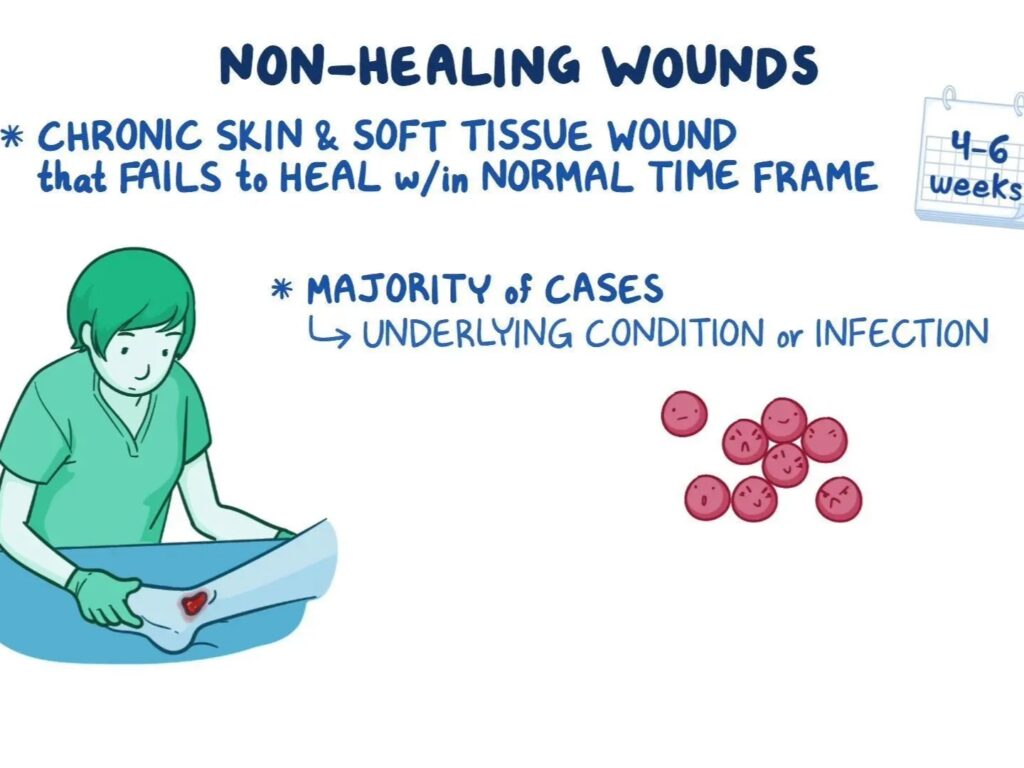
Wounds Stall: Common Barriers to Healing and How We Address Them.
At AA Wound Care, we understand how frustrating it can be when a wound just won’t heal. Whether it’s a diabetic ulcer, a post-surgical wound, or a pressure sore, delayed healing can lead to complications and impact your quality of life. But why do some wounds stall in the healing process — and what can be done about it?
Let’s explore the common barriers to wound healing and how our specialized care at AA Wound Care helps overcome them.
In this article, we’ll walk you through what HBOT is, how it works, and whether it could be the next step in your healing journey.
1. Poor Circulation
Barrier:
When blood flow is restricted — due to conditions like peripheral arterial disease (PAD) or venous insufficiency — oxygen and nutrients can’t reach the wound, slowing healing.
Our Approach:
We assess circulation using advanced diagnostics and collaborate with vascular specialists when needed. Our customized care plans may include compression therapy, vascular support, or referrals for revascularization procedures.
2. Infection
Barrier:
Infections disrupt the healing process and can lead to tissue damage or sepsis if untreated. Even low-level, chronic infections can keep wounds from progressing.
Our Approach:
We perform thorough wound assessments, use wound cultures when appropriate, and apply evidence-based antimicrobial dressings or topical therapies. Infection control is central to every treatment we provide.
3. Uncontrolled Diabetes
Barrier:
Elevated blood sugar levels damage blood vessels and nerves, weakening the body’s natural ability to heal and increasing infection risk.
Our Approach:
We work closely with your primary care provider or endocrinologist to ensure blood glucose is under control. At the same time, we use advanced wound treatments like offloading devices, diabetic-friendly dressings, and regular monitoring.
4. Pressure and Friction
Barrier:
Continuous pressure or friction (especially in bed-bound or wheelchair-bound individuals) leads to pressure ulcers and delays healing by reducing blood flow to the skin.
Our Approach:
We recommend pressure-relieving devices (like specialized mattresses or cushions), repositioning schedules, and protective dressings to minimize trauma and allow healing.
5. Poor Nutrition
Barrier:
A lack of protein, vitamins, and essential nutrients can slow tissue repair and reduce immune function.
Our Approach:
Our team reviews your nutritional status and offers guidance or referrals to dietitians. We may suggest supplements rich in protein, zinc, and vitamins A and C — all key to wound healing.
6. Inadequate Wound Care or Improper Dressing Use
Barrier:
Using the wrong dressing, leaving wounds too dry or too moist, or inconsistent care can all stall healing.
Our Approach:
At AA Wound Care, every treatment is tailored. We choose dressings based on your wound’s specific stage and condition — from moisture-balancing hydrogels to advanced negative pressure wound therapy (NPWT). We also educate caregivers and patients on proper at-home wound care.
7. Underlying Health Conditions
Barrier:
Conditions like kidney disease, autoimmune disorders, and cancer can complicate wound healing.
Our Approach:
We take a whole-person approach to care. We coordinate with your full healthcare team to ensure your wound care plan complements your other medical needs.
Healing Happens Here
Chronic or non-healing wounds aren’t just a nuisance — they’re a sign that your body needs specialized attention. At AA Wound Care, we combine compassionate care with the latest in wound management to get you back on track.